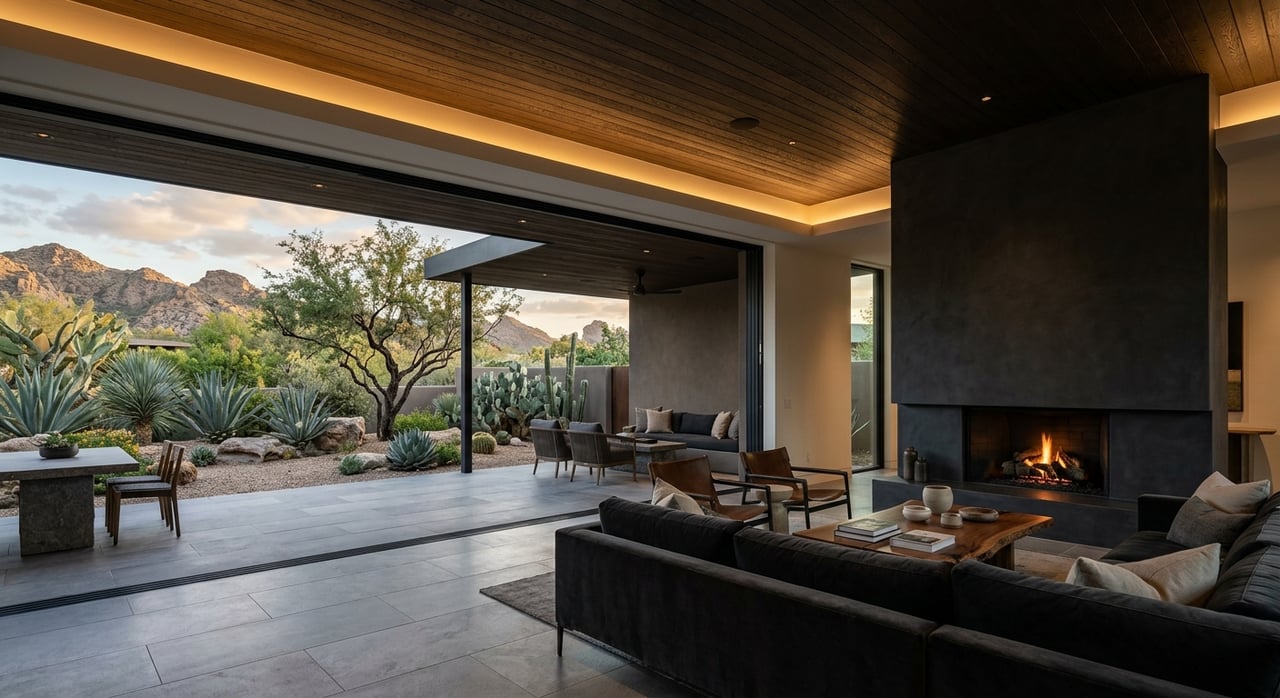
If you have ever wondered why so many luxury homes in Paradise Valley feel more like private estates than standard high-end subdivisions, the answer starts with the land itself. This is a town shaped by large lots, low-density planning, and design rules that place a premium on openness, desert character, and careful site planning. If you are comparing homes here, understanding the architecture can help you see beyond the finishes and evaluate how a property may live, age, and adapt over time. Let’s dive in.
Why Paradise Valley Homes Feel Distinct
Paradise Valley has a very different physical framework than many other luxury markets. According to the Town, most land is zoned for single-family residential use, and much of the residential land is zoned R-43, which generally requires at least one acre per lot. That planning pattern helps explain why homes here often read as custom compounds with long driveways, wider footprints, and more privacy than you might find in denser luxury areas. You can review that context in the Town’s information on residential zoning and land use.
The Town’s 2022 General Plan adds another layer. It emphasizes visually open streetscapes, preservation of native desert landscaping, and development that stays compatible with Paradise Valley’s low-density residential character. It also supports limits on floor area ratio, lot coverage, setbacks, and building and wall heights, all of which shape how homes sit on the land.
That means architecture in Paradise Valley is not only about style. It is also about how a home relates to the desert, how much of the lot remains visually open, and how the structure balances privacy with views, shade, and outdoor living.
Hillside Design Changes the Equation
If a home sits on or near a hillside parcel, design considerations become even more important. The Town’s Hillside Building Committee reviews projects for compliance with the Hillside Code and may evaluate height, lighting, materials, grading, drainage, land disturbance, remodels, additions, solar installations, accessory structures, and pools.
For you as a buyer, this matters because the lot can shape the future as much as the house. A beautifully sited residence may offer striking views and privacy, but future changes could involve more review and documentation than you expect. On some hillside properties, the Town’s Residents Guide also notes that items like painting, roofing, outdoor lighting, walls, fences, lot disturbance, and landscaping require approval.
Contemporary Architecture in Paradise Valley
Contemporary homes are some of the most recognizable luxury properties in Paradise Valley. In broad architectural terms, contemporary and modernist-influenced residential design is often rectilinear, minimally ornamented, and organized around open interior space, large windows, and a strong connection between indoors and outdoors, as described in National Park Service material on modern design.
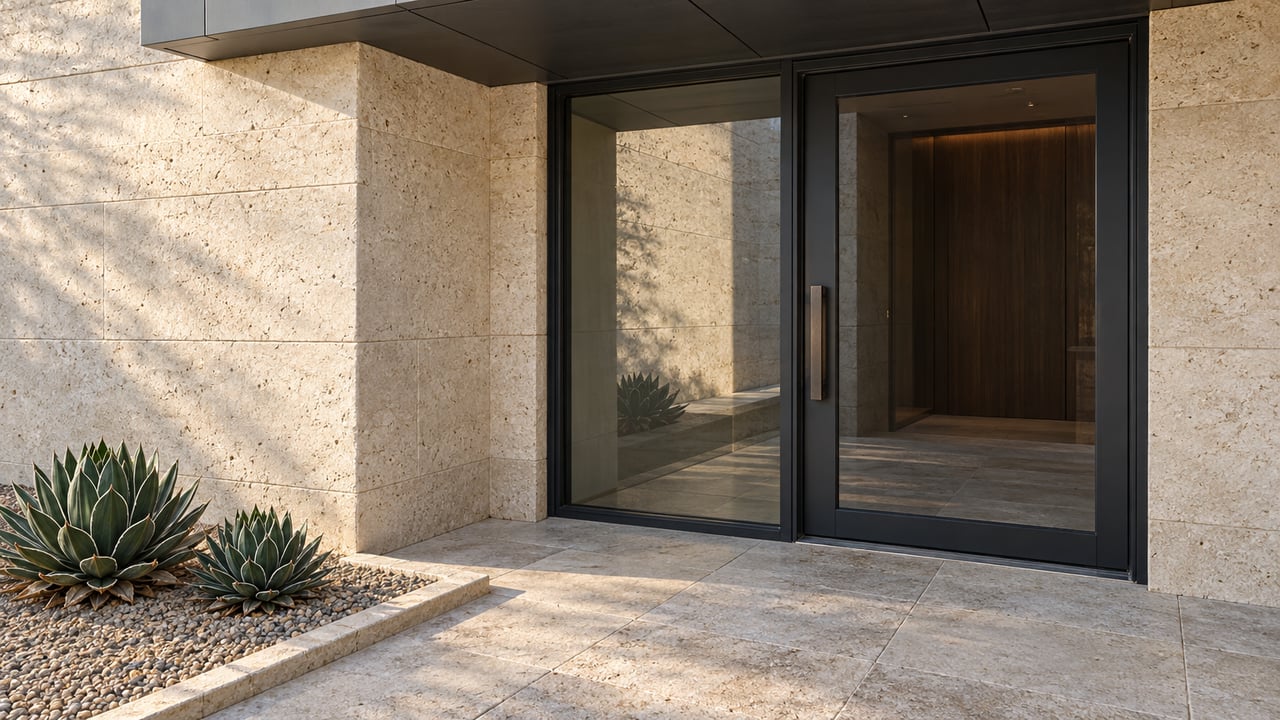
In practical terms, contemporary homes here often center on a large great room, wide expanses of rear-facing glass, and living areas that orient toward a pool, terrace, or mountain view rather than a formal front porch. The focus is usually on light, openness, and a clean visual composition. Materials often include combinations of glass, steel, concrete, wood, and stone, which reinforce the restrained, architectural feel.
For many buyers, the appeal is flexibility. Open plans and minimal ornament can make later interior updates feel more natural, provided the structure and window layout support your goals.
Desert Modern and Climate Response
Desert modern takes contemporary design and adapts it to the Sonoran Desert. A University of Arizona and AIA case study highlights features such as courtyard microclimates, year-round shade, highly insulated walls, minimal west-facing windows, shaded terraces, rooftop solar, rainwater harvesting, native xeriscape planting, and indoor-outdoor living.
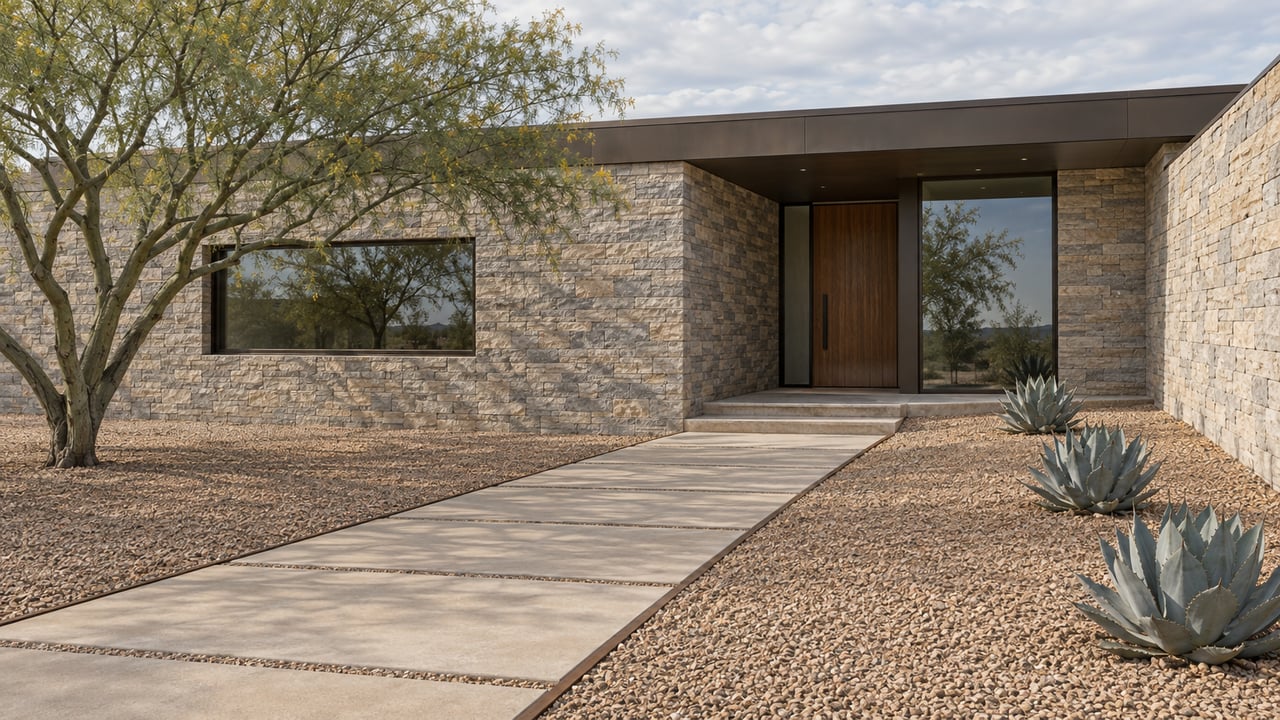
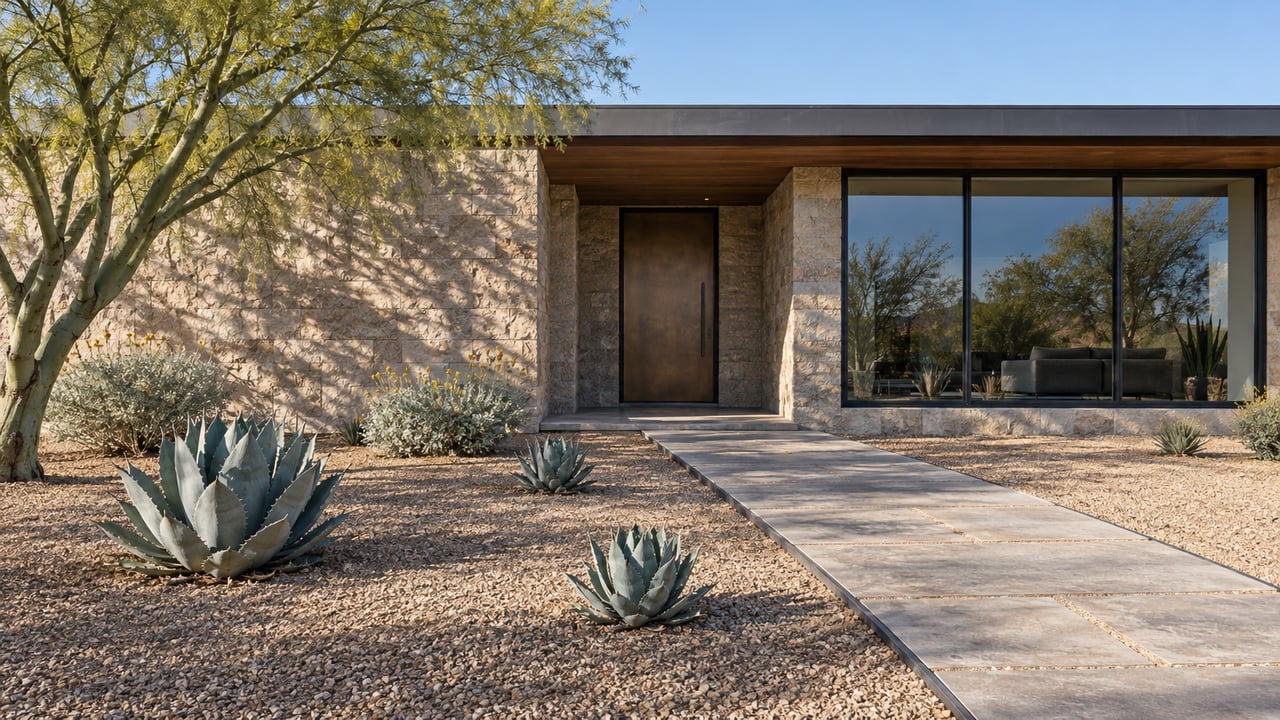
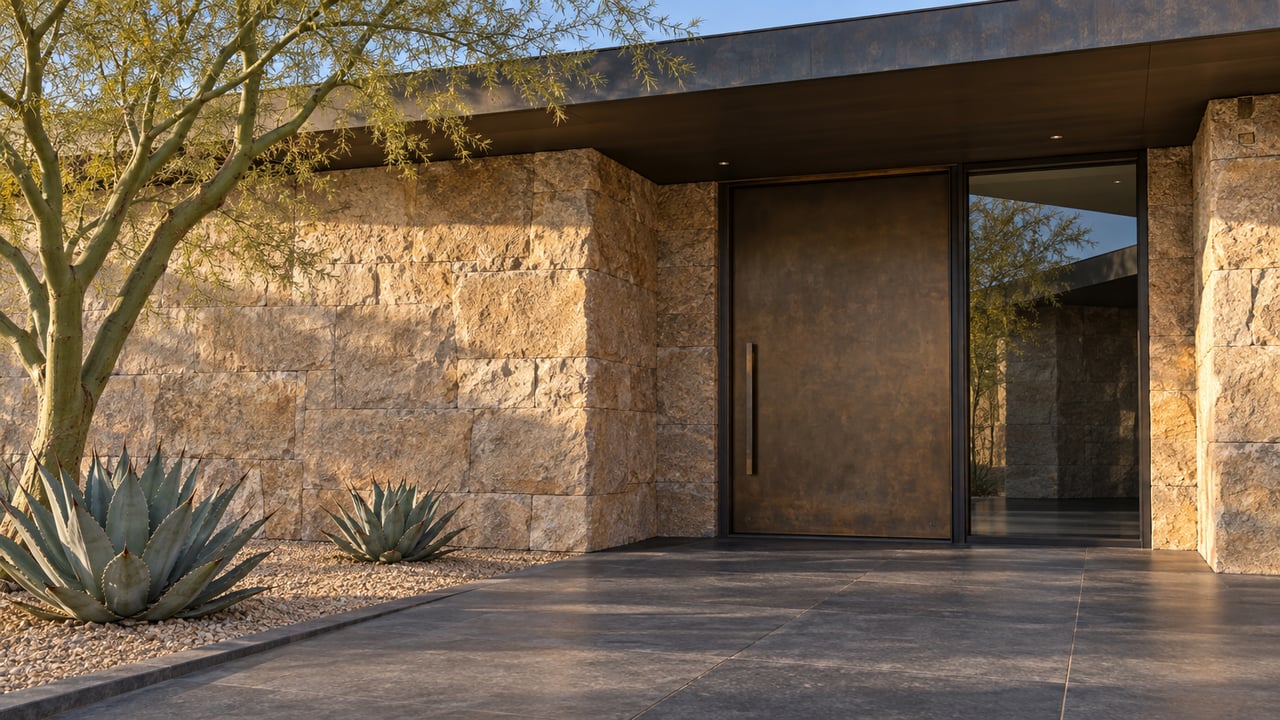
In Paradise Valley, that often translates into low horizontal massing, shaded glass, earth-toned materials, and a quieter relationship with the landscape. These homes tend to feel intentional rather than decorative. They are often designed to manage sun exposure, frame views, and create more comfortable outdoor living areas through shade and placement.
If you are drawn to architecture that feels current but grounded in the desert, desert modern may be the style that best aligns with your priorities. It often blends design clarity with practical climate response in a way that feels especially natural in Paradise Valley.
Ranch Homes on Large Lots
Ranch architecture also has a strong presence in the area. Britannica describes the ranch house as a one-level residence with a low roof and an open plan, while National Park Service historic context materials associate ranch homes with low horizontal silhouettes, patios, gardens, sliding glass doors, picture windows, and exposed beams.
In Paradise Valley, ranch homes are rarely the compact postwar versions many people picture first. On larger lots, ranch design can expand into broad single-story estates with long wings, courtyards, and spacious outdoor connections. That horizontal layout often feels especially well suited to the town’s one-home-per-lot pattern and generous parcel sizes.
From a usability standpoint, ranch homes can be appealing because circulation is often straightforward and one-level living can support long-term flexibility. On the right lot, additions or reconfiguration may also feel more natural than they would in a tighter or more vertical home form.
Mediterranean-Inspired Estate Design
For buyers who want a more formal arrival experience, Mediterranean-inspired estates remain a meaningful part of the Paradise Valley architectural mix. National Park Service descriptions of Mediterranean Revival architecture highlight features such as stucco walls, red tile roofs, arches, parapets, wrought iron details, balconies, wood brackets, courtyards, loggias, and casement windows.
In Paradise Valley, these homes often scale up into more elaborate estate architecture. You may see grand entries, arched outdoor corridors, enclosed courtyards, layered rooflines, and a more decorative exterior composition than in contemporary or desert-modern homes. The overall effect is often more traditional and resort-oriented.
This style can be especially appealing if you value architectural detailing and a sense of ceremony when arriving home. It tends to offer a different emotional experience than the clean restraint of a modern residence.
How Style Affects Maintenance
Architecture is not only about aesthetics. It also shapes the kind of maintenance a home may require over time.
Contemporary and desert-modern homes often depend on large glazing systems, low-slope roofs, and crisp exterior detailing. Based on the style traits identified in architectural sources, that can make the building envelope especially important. Items such as glazing performance, sealants, roof drainage, flashing, and shading features may deserve close attention.
Ranch homes often have a simpler exterior vocabulary and a straightforward floor plan. That can make updates easier to integrate without fighting the original design language. Their one-level layout can also support practical changes over time.
Mediterranean-inspired homes usually rely on coordinated elements such as stucco, clay tile, ironwork, arches, and decorative profiles. Because of that, repairs or renovations may need to be more detail-sensitive. A window replacement, roof repair, or exterior update may look best when it matches the home’s existing texture, form, and ornament closely.
Renovation Potential in Paradise Valley
In Paradise Valley, renovation potential is never just about square footage. It is also about the lot, the style, and the Town’s design framework.
The General Plan emphasizes drought-tolerant native landscaping, visual openness, and durable materials such as stone, masonry, wrought iron, and vegetation for walls and edges. That means a renovation that works beautifully in another market may need a different approach here.
Before you fall in love with a home based on finishes alone, it helps to ask whether the current look is structural or cosmetic. A fresh interior can be changed relatively easily, but a home’s massing, rooflines, window placement, and site relationship are usually more fundamental. In Paradise Valley, hillside review and desert-character goals can make those foundational decisions especially important.
Key Terms to Understand in Listings
Luxury listing language can sound polished, but in Paradise Valley, a few terms are worth understanding clearly.
Indoor-Outdoor Flow
This usually refers to a layout where primary living spaces connect directly to patios, terraces, courtyards, pools, or yards through large doors or walls of glass. It is especially common in contemporary and desert-modern homes.
Courtyard House
A courtyard house is organized around a private outdoor space. In the Sonoran Desert, courtyards can help create shade, privacy, and more comfortable microclimates.
Massing
Massing refers to the overall shape and volume of a home. In Paradise Valley, low horizontal massing often aligns with ranch or desert-modern design, while more layered or articulated volumes may point toward Mediterranean-inspired estates.
Low-Slung or Horizontal Emphasis
This describes a house that feels close to the ground rather than vertically stacked. It is a common cue in ranch architecture and in many contemporary homes.
Resort-Like or Mediterranean
These words often signal stucco, arches, tile roofs, ironwork, balconies, and a more formal entry sequence. In some listings, they can also indicate a stronger decorative identity than you would see in a cleaner-lined modern home.
A Simple Framework for Comparing Homes
When you tour Paradise Valley properties, try filtering each one through three practical questions.
- What is the underlying architectural style?
- How much of the current appearance is structural versus cosmetic?
- Does the lot, especially if it is a hillside parcel, support future changes easily or with more review?
Those questions can help you look past staging and surface finishes. They also help you compare homes in a way that is more aligned with long-term usability, maintenance, and design potential.
Whether you are drawn to a clean desert-modern estate, a sprawling ranch residence, or a more formal Mediterranean-inspired home, Paradise Valley rewards buyers who understand how architecture, site planning, and town guidelines work together. If you want help evaluating design, renovation potential, or overall fit as you search, Apex Residential offers a design-conscious, pragmatic approach tailored to luxury homes in Paradise Valley and across Greater Phoenix.
FAQs
What architectural styles are most common in Paradise Valley luxury homes?
- Buyers commonly see contemporary, desert modern, ranch, and Mediterranean-inspired estate design in Paradise Valley.
What makes Paradise Valley home architecture different from other luxury markets?
- Paradise Valley’s low-density zoning, large lots, visual-openness goals, and desert-focused design policies help create a landscape of custom homes rather than more repetitive housing patterns.
What does desert modern architecture mean in Paradise Valley?
- In Paradise Valley, desert modern usually refers to climate-responsive contemporary design with shaded outdoor areas, low horizontal forms, indoor-outdoor living, and materials that blend with the Sonoran landscape.
What should buyers know about hillside homes in Paradise Valley?
- Hillside homes may involve additional Town review for items such as grading, lighting, materials, remodels, pools, landscaping, and other site or exterior changes.
How does architecture affect future renovation in Paradise Valley?
- A home’s style, lot conditions, and Town guidelines can all shape renovation options, so it is important to evaluate both the house design and the parcel before planning major updates.
Are ranch homes still relevant in Paradise Valley luxury real estate?
- Yes, ranch homes remain relevant because large lots allow expansive single-story layouts, courtyard planning, and strong indoor-outdoor connections that many luxury buyers still value.