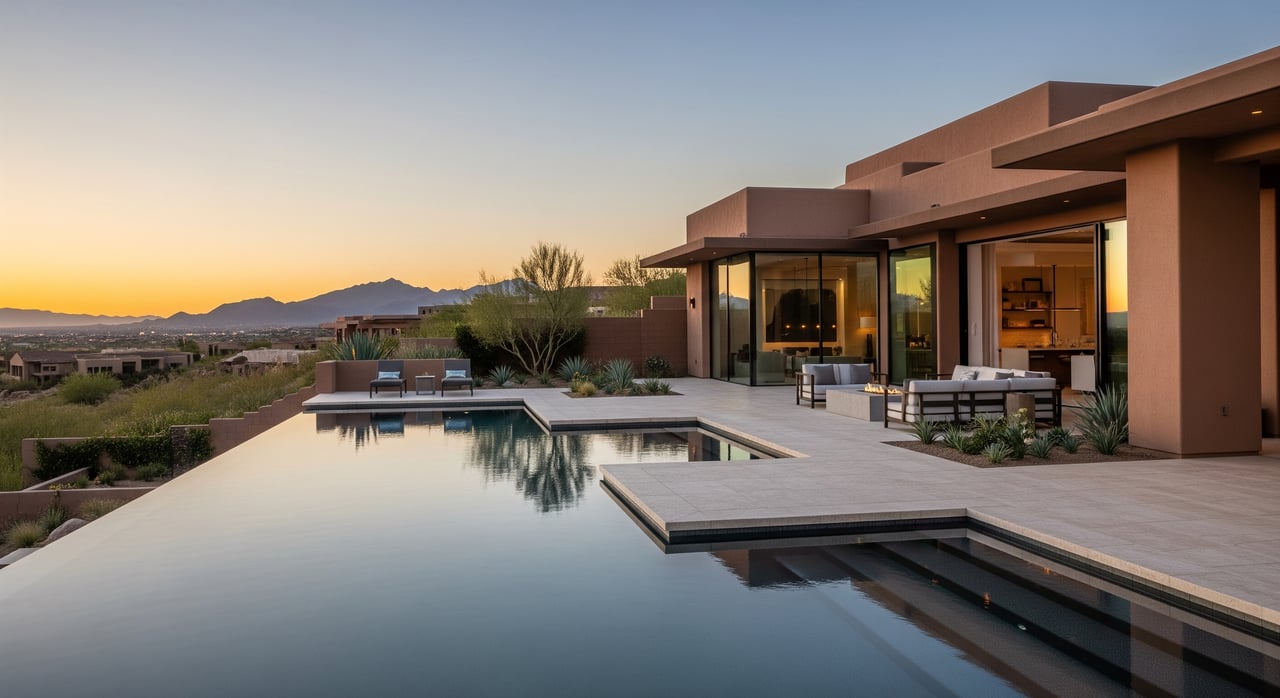
What makes some Paradise Valley estates trade at eye‑opening premiums while others lag? If you are weighing a purchase or planning a sale, you want clear, local insight into what truly moves price. In this guide, you will learn the specific demand drivers that shape value in Paradise Valley, how to think about pricing when comps are thin, and when timing gives you an edge. Let’s dive in.
Why Paradise Valley commands a premium
Paradise Valley is a small, low‑density town known for large lots, private estates, and mountainside living. Inventory is structurally limited by zoning that favors single‑family estates on substantial parcels. Transaction volume at the top end is relatively low, which creates thinner comparable sales and more case‑by‑case pricing.
For both buyers and sellers, this means understanding land, views, design quality, and lifestyle adjacency is essential. Each element contributes a distinct portion of value. The most coveted properties combine several of these attributes in one offering.
Core demand drivers
Lot size, privacy, and estate geometry
Large, usable lots are the foundation of value in Paradise Valley. Acreage that supports guest houses, pool complexes, and expansive outdoor living captures a scarcity premium. Privacy buffers from setbacks, mature landscaping, and topography add material value.
What to watch:
- Consider the first acre premium and whether additional acres are flat, usable, and well oriented.
- Separate land value from improvement value when comps are thin.
- Evaluate privacy, approach, and how the estate sits on the site.
Architectural pedigree, design, and build quality
Named architects, high‑caliber materials, and timeless craft can attract design‑driven buyers. Pedigree and well‑executed renovations often produce premiums. Highly bespoke layouts may narrow the buyer pool, while universally appealing quality expands it.
What to watch:
- Confirm architect attribution and any design awards.
- Weigh adaptability to today’s lifestyle expectations.
- Review systems and finishes for true long‑term quality.
Resort adjacency, clubs, and lifestyle amenities
Convenience to top resorts, private clubs, and wellness and dining hubs is a major lifestyle driver. Short drives or walkable proximity often trade at a premium due to on‑demand services and prestige. These locations can also be important for certain rental strategies where permitted.
What to watch:
- Map actual drive times to marquee resorts and clubs.
- Confirm membership access, waitlists, and fees with the relevant organizations.
- Consider how guests will arrive, park, and experience the property.
Views, orientation, and micro‑topography
Camelback Mountain and surrounding ridgelines create coveted mountain and city‑skyline panoramas. Orientation that captures sunrise or sunset and preserves unobstructed sightlines is highly prized. For many estates, a signature view represents a significant share of the price delta versus similar homes without it.
What to watch:
- Compare nearby sales with and without views to gauge premiums.
- Evaluate future view risk from landscaping growth or development.
- Confirm outdoor living zones align with the best orientation.
Climate, landscaping, and outdoor living
In this segment, resort‑caliber outdoor living is expected. Desert‑adapted landscaping, heated pools and spas, covered loggias, and full outdoor kitchens expand usable living space year‑round. High‑quality hardscape and shade solutions can materially affect willingness to pay.
What to watch:
- Assess the durability of materials and mechanicals in desert conditions.
- Review safety and compliance features for pool areas.
- Value integrated lighting, misting, and audio as part of the experience.
Access, security, and privacy controls
Controlled access, gated enclaves, and private roads are priority features for many high‑net‑worth buyers. Seclusion and quiet surroundings support premium pricing, while proximity to busy arterials can suppress value.
What to watch:
- Understand HOA or road maintenance obligations.
- Evaluate how the approach and gatehouse support privacy.
- Consider delivery and service access that does not disrupt daily living.
Economic and tax context
Arizona’s tax framework and comparatively lower cost of living are part of the migration story for affluent buyers. Property taxes are based on assessed value rather than sale price, and there is no state inheritance tax. For both buyers and sellers, modeling total carrying costs and potential federal tax impacts is wise.
What to watch:
- Verify assessed values and any pending changes with public records.
- Consult tax advisors on deductions, basis adjustments, and timing.
- Compare cost of ownership versus coastal markets when relocating.
How pricing really works at the top
Thin comps and comparable scarcity
Ultra‑luxury transactions are infrequent, so traditional comps can be noisy. You will often need a blended approach that includes carefully selected nearby sales, time‑adjusted market indices for direction, and replacement‑cost analysis for unique estates.
Practical framework:
- Start with the closest like‑kind sales, then expand radius cautiously to adjacent Scottsdale and Phoenix trophy areas.
- Adjust for land, view, and amenity differences first, then for interior quality.
- Use indices for trend confirmation, not as a pricing anchor.
Lot premiums, tear‑downs, and redevelopment math
Lot value can dominate pricing where subdivision is restricted. Older homes on exceptional parcels may trade primarily for the site. Sellers should weigh a targeted renovation against selling as‑is to a buyer planning a rebuild, considering build costs and permitting timelines.
Decision checkpoints:
- Price raw land per acre versus improved parcels in the immediate area.
- Obtain high‑end builder estimates for renovation versus new construction.
- Confirm zoning, setbacks, height limits, and any design review steps.
Architecture, interiors, and buyer segmentation
Architectural pedigree may command a niche premium among design‑forward buyers. On the other hand, buyers seeking modern, open plans may value layout flexibility more than provenance. The right strategy targets the most likely cohort through curated presentation.
Marketing notes:
- Highlight the true value story, whether it is design, land, or views.
- Stage to demonstrate flow and outdoor connectivity.
- Address future adaptability to broaden appeal.
Feature stacking and fractional value
Not all features add value linearly. The combination of a large private lot, unobstructed mountain views, and resort adjacency is often worth more than the sum of each individually. Pricing must reflect the synergy of the estate as a whole.
Timing the market in Paradise Valley
Seasonal buyer flows
Paradise Valley sees peak visitation in winter months, roughly November through March. Listing activity and showing traffic typically increase as seasonal residents arrive. Summer brings lighter traffic, but serious relocation buyers still transact.
Seller strategies:
- Enter the market in early fall to capture previews and winter momentum.
- Align high‑impact marketing with snowbird calendars and regional luxury events.
- Maintain showing readiness year‑round to accommodate private tours.
Buyer strategies:
- Explore off‑season opportunities when competition can be lower.
- Use thorough inspections and remote diligence if you are not local.
- Prepare proof of funds and closing logistics in advance for speed.
Practical checklists
Seller checklist: maximize your outcome
- Define the property’s core value pillars: land, view, design, or location.
- Commission pre‑listing inspections to surface and solve issues early.
- Stage interiors and outdoor living to highlight lifestyle and flow.
- Produce privacy‑conscious media, including secure virtual tours.
- Model pricing using comps, replacement cost, and buyer demand signals.
- Prepare permits and records: plans, warranties, HOA, and surveys.
- Time launch to peak visibility while staying flexible for qualified showings.
Buyer checklist: buy with precision
- Prioritize lot quality, orientation, and view corridors before interiors.
- Confirm zoning, setbacks, and build envelope for future changes.
- Evaluate outdoor living systems and ongoing maintenance needs.
- Benchmark renovation versus rebuild with local luxury builders.
- Review assessed values and estimated carrying costs.
- Engage an appraiser with luxury experience if comps are thin.
When renovation pays
Targeted updates that align with market expectations often deliver better returns than full overhauls. Kitchens, primary suites, mechanical systems, and resort‑style outdoor spaces are high‑impact zones. For highly customized estates, a light design refresh and expert staging can unlock value without over‑investing.
Practical steps:
- Scope improvements that enhance livability and indoor‑outdoor flow.
- Choose materials suited to desert conditions and long‑term wear.
- Present clear documentation of upgrades to support buyer confidence.
Work with a team that knows Paradise Valley
At this level, details decide outcomes. You deserve a partner who can decode lot geometry, quantify view premiums, and curate presentation that speaks to the right buyers. If you are planning to buy or sell in Paradise Valley, connect with the local team that blends design, valuation, and white‑glove execution. Reach out to Apex Residential to start a confidential conversation.
FAQs
How much does lot size affect price in Paradise Valley?
- Lot size is a primary driver, with the first acre and usable, well‑oriented acreage carrying disproportionate value compared with raw acreage alone.
Do named architects increase value in Paradise Valley luxury home sales?
- Architectural pedigree can command a premium among design‑oriented buyers, but adaptability to current lifestyles and overall quality remain decisive.
Should a Paradise Valley seller renovate before listing a luxury home?
- Targeted updates to key spaces and systems often deliver better ROI than full overhauls; model costs and likely premiums before committing capital.
Is proximity to resorts and private clubs worth a premium in Paradise Valley?
- Yes, convenience to marquee resorts and clubs correlates with higher demand, though specific premiums depend on local comps and property attributes.
What is the best time to list a luxury home in Paradise Valley?
- Entering the market in early fall positions you to capture winter buyer flows, but the ideal timing depends on inventory levels and your financial goals.